
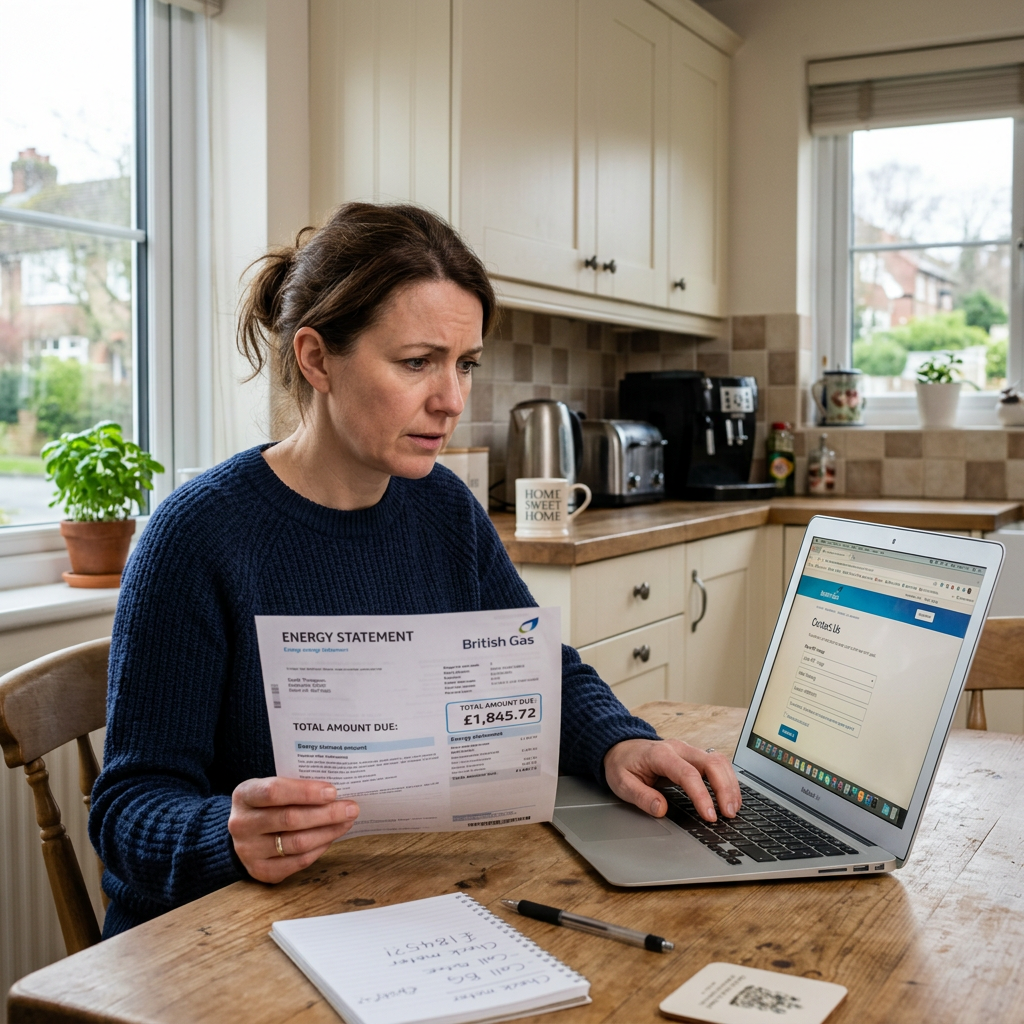
When Should You Challenge a Bill?
Energy billing errors are more common than most people realise. Estimated readings that do not reflect actual usage, incorrect tariff rates, direct debits set too high, or charges after switching — all of these can result in a bill that does not accurately reflect what you owe. If something does not look right, you have every right to challenge it.
Common Reasons Bills Go Wrong
- Estimated readings: If your supplier has been estimating usage and the estimate is too high, you will have been overbilled.
- Incorrect meter readings: A misread digit by a meter reader can result in a wildly wrong bill.
- Wrong tariff applied: If you switched tariff and the new rate was not applied from the correct date, you may have been charged at the wrong rate.
- Back-billing: Suppliers cannot back-bill for energy used more than 12 months ago — if yours has, challenge it.
Step 1: Gather Your Evidence
Before contacting your supplier, pull together your recent bills, your own meter readings (take a photo as evidence), any confirmation of readings you have submitted, and your tariff details showing the rate you should have been charged. If you want to compare electricity prices, it only takes a few minutes.
Step 2: Contact Your Supplier
Call or write to customer services with a clear explanation of the problem, your evidence, and the outcome you are seeking. Keep records of every communication — dates, names, what was agreed. Most straightforward disputes are resolved at this stage.
Step 3: Make a Formal Complaint
If the initial contact does not resolve things, escalate to a formal complaint. Suppliers must acknowledge it within two working days and resolve it within eight weeks. You can also find cheaper electricity to see what’s available.
Step 4: The Energy Ombudsman
If eight weeks pass without resolution, or the supplier issues a deadlock letter, take the case to the Energy Ombudsman — a free, independent service. They can require your supplier to correct the bill, issue a refund, and pay compensation. Their decisions are binding on suppliers.
Preventing Future Problems
- Submit meter readings monthly and always before a price change or switch.
- Review your direct debit annually — if you are consistently in large credit, ask for it to be reduced.
- Check your bills carefully whenever your tariff changes.
The best protection against an inflated bill is being on the right tariff in the first place. Compare deals now to make sure you are not overpaying.


0 Comments